Kodak Slide N Scan Film Scanner review buyers usually want one thing: a simple way to turn old film into usable digital files without a steep learning curve.
This model aims squarely at that job, and it does it with impressive convenience.
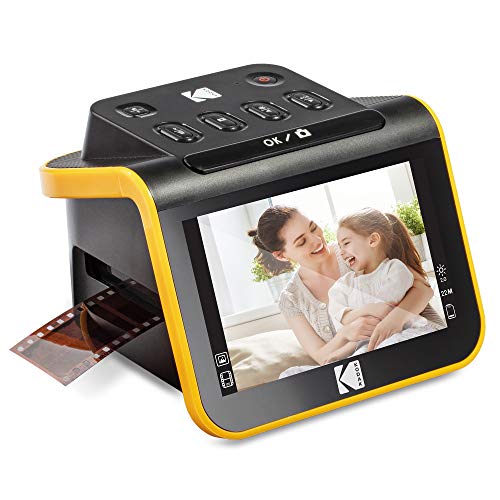
If you have boxes of family slides or negatives and want a straightforward home solution, the Kodak Slide N Scan Film Scanner is worth a serious look.
Kodak Slide N Scan Review Summary
Kodak Slide N Scan Film Scanner is built for people who want to digitize old memories quickly, not for professionals chasing the absolute best archival workflow.
It combines a 22MP CMOS sensor, a 5-inch LCD, and one-touch operation to make film conversion feel approachable for beginners, which is exactly why it stands out.
For home users with family archives, vacation slides, or mixed legacy film formats, this scanner offers a practical balance of speed, simplicity, and decent image quality.
It is especially appealing if you want to preview, edit, and save files on the device itself instead of relying on complex software.
Scorecard
| Category | Score | Why it matters |
|---|---|---|
| Scanning quality | 8.0 | 22MP capture with CMOS sensing gives solid digital conversions for old negatives and slides. |
| Ease of use | 9.0 | Simple one-touch scanning and easy loading make it highly approachable. |
| Film compatibility | 9.0 | Supports 135, 126, 110 negatives and 50mm slides, including color and black-and-white film. |
| Screen and preview experience | 8.0 | The 5-inch LCD and gallery mode make framing and review much easier. |
| Editing and conversion controls | 8.0 | Built-in adjustments for film type, brightness, color, resize, and date/time are useful. |
| Connectivity and file handling | 7.0 | USB and HDMI are handy, but storage is limited to SD/SDHC cards up to 32GB and no card is included. |
| Portability and footprint | 8.0 | Compact, lightweight, and easy to keep on a desk. |
Bottom line: this is a smart buy for casual digitizing, not a lab-grade scanner.
If you want a user-friendly way to preserve film at home, the Kodak Slide N Scan Film Scanner delivers real value.
Key Features and Specifications of Kodak Slide N Scan
The core appeal of the Kodak Slide N Scan Film Scanner is that it removes most of the friction from film digitizing.
Instead of making you manage advanced software, negative inversion settings, and tedious post-processing, it packages the job into a compact desktop unit with a large display and simple controls.
| Specification | Detail |
|---|---|
| Brand | KODAK |
| Model | KODAK SLIDE N SCAN Film and Slide Scanner with Large 5” LCD Screen |
| Scanner type | Film |
| Media type | Negatives, slides |
| Supported formats | 135, 126, 110 negatives; 50mm slides |
| Resolution | 22 megapixels |
| Color depth | 24-bit |
| Sensor technology | CMOS |
| Display | 5-inch LCD with wide viewing angle and gallery mode |
| Connection type | HDMI, USB |
| File format | JPEG photos |
| Storage support | SD/SDHC up to 32GB |
| Power | AC-powered desktop scanner |
| Wattage | 15 watts |
| Weight | 1 pound |
| Dimensions | 5.27 x 5.35 x 3.74 inches |
| Minimum system requirement | Windows 7 |
That spec sheet tells you a lot about the product’s intent.
It is compact, self-contained, and designed for quick at-home conversion of film into JPEGs.
The scanner supports both color and black-and-white negatives, which matters if your archive includes mixed family photography or older personal film rolls.
The inclusion of a slide holder, adapters for 135, 110, and 126 film, a cleaning brush, USB cable, and HDMI cable is a practical bonus.
Those accessories reduce the number of extra purchases needed before you can start scanning.
Pros and Cons of Kodak Slide N Scan
Every film scanner involves tradeoffs, and the Kodak Slide N Scan Film Scanner pros and cons are especially important because this is a convenience-first device.
Pros
- Very easy to use for beginners and casual users.
- Supports multiple legacy formats, including 135, 126, and 110 negatives plus 50mm slides.
- Large 5-inch screen improves previewing and reduces guesswork.
- Built-in editing controls help with brightness, color, and film type.
- Direct-to-card saving keeps the workflow simple.
- Compact footprint makes it easy to store on a desk or shelf.
- Included adapters and cleaning brush add value out of the box.
Cons
- SD card not included, so you may need to buy storage separately.
- Limited to SD/SDHC cards up to 32GB, which may feel restrictive for large archives.
- Manual, single-sheet workflow is slower than batch-oriented alternatives.
- Not ideal for high-volume or professional archiving.
In plain terms, the strengths are convenience and accessibility, while the drawbacks are mostly about throughput and storage flexibility.
That is a fair tradeoff for the target buyer.
Who Should Buy Kodak Slide N Scan?
The Kodak Slide N Scan Film Scanner is a strong fit for people who value simplicity over technical control.
If you want a device that gets you from film to digital files without a long learning curve, this is a sensible choice.
- Family archivists digitizing boxes of vacation slides and old negatives.
- Casual home users who want a straightforward scanner with minimal setup.
- Buyers with mixed legacy formats like 135, 126, 110, and 50mm slides.
- Users who prefer on-device preview and editing over computer-heavy workflows.
- Anyone who wants a dedicated desktop scanner for a one-time or occasional project.
You should probably skip it if you need high-speed batch scanning, precise manual color workflows, or archival-grade outputs for print reproduction.
In those cases, a more advanced flatbed or dedicated film scanner makes more sense.
What Film Formats It Supports
Compatibility is one of the biggest reasons buyers choose the Kodak Slide N Scan Film Scanner over a generic flatbed.
It supports 135, 126, and 110 negatives as well as 50mm slides, which covers the most common household film formats from decades of consumer photography.
That flexibility matters because many people do not know exactly what is in their archive until they open the boxes.
A scanner that handles several popular formats can save time and reduce the chance that you end up with a device that only works for part of your collection.
It also handles both color and black-and-white film, which is important if your archive spans different eras or photo styles.
For most family archives, that is enough coverage to make the product genuinely useful.
How the 5-Inch LCD Helps with Scanning
The 5-inch LCD is one of the most buyer-friendly design choices here.
Instead of forcing you to bounce between a scanner and a computer screen, the Kodak Slide N Scan Film Scanner lets you preview, review, and even use gallery mode right on the unit.
That wide-viewing-angle display is useful in several ways:
- It makes framing and alignment easier before capture.
- It helps you spot dust, exposure issues, and composition problems quickly.
- It reduces the learning curve for less technical users.
- It makes the scanner feel more like a standalone appliance than a tech project.
For buyers restoring old family memories, this is a major advantage.
The less time you spend fighting software, the more likely you are to finish the job.
Included Accessories and Setup
Setup is straightforward, and that is important for a product in this category.
The Kodak Slide N Scan Film Scanner includes adapters for 135, 110, and 126 film, plus a 50mm slide holder, a cleaning brush, a USB cable, and an HDMI cable.
That accessory package shows the product was designed for immediate use.
The quick-feeding tray technology and easy-load film insert are especially helpful because legacy film can be awkward to handle, and frustration during loading is one of the biggest reasons people abandon digitizing projects.
One important caution: you still need an SD or SDHC card for saving files, and it is not included.
If you are buying this scanner for a weekend archive project, make sure to order storage at the same time.
Editing, Saving, and File Workflow
The built-in capture software is one of the better features for regular users.
You can convert, resize, enhance, choose film type, adjust color and brightness, and add date/time without relying on advanced editing programs.
That workflow is ideal for people who want usable digital files, not a complex post-production pipeline.
The scanner outputs JPEG photos, which makes sharing by email, viewing on devices, and general backup simple.
For most family archive use cases, JPEG is perfectly acceptable.
There are still a few limitations to understand.
Direct-saving to SD or SDHC is convenient, but the card limit of 32GB is a cap on storage flexibility.
Also, because the device is designed for simplicity, it is not the best choice if you want raw file control or an extensive manual workflow.
If you plan to scan thousands of frames, the process will still take time.
This is a slow-and-steady home archiving tool, not a production scanner.
But for moderate personal use, the workflow is efficient enough.
Design and Usability for Home Archives
At just about a pound and with a compact footprint, the Kodak Slide N Scan Film Scanner is easy to keep on a desk, bookshelf, or in a dedicated home office corner.
The small size is especially helpful because film scanning often happens in bursts rather than as a permanent daily workflow.
The design choices all support usability: a simple physical layout, one-touch scanning, an integrated display, and a small accessory set.
This is not a premium industrial machine, and it does not try to be one.
Instead, it focuses on being a friendly appliance for occasional archiving.
From a buyer’s perspective, that makes a lot of sense.
People who inherited old negatives usually want results, not a software tutorial.
The Kodak Slide N Scan Film Scanner gives them a clear path from box of film to digital JPEG.
Kodak Slide N Scan Film Scanner Review: Alternatives to Consider
No single scanner is perfect for every archive.
If you are comparing options, these alternatives are worth considering alongside the Kodak Slide N Scan Film Scanner:
- Epson V600 film scanner – better for users who want a more traditional flatbed scanning setup with broader versatility.
- KODAK Slide N SCAN Max – a related option if you want to compare Kodak’s wider film-scanning line.
- Plustek film scanner – a stronger fit for buyers prioritizing dedicated film scanning and more advanced control.
- Flatbed scanner with transparency unit – a flexible choice if you want to scan photos, documents, and transparencies in one device.
The Kodak model wins on simplicity.
The alternatives may win on flexibility, manual control, or batch-oriented scanning depending on your needs.
Who Should Buy a Slide Scanner Instead of Outsourcing Prints
Buying a dedicated scanner makes more sense than outsourcing if you have a meaningful stack of slides or negatives and want the freedom to work through them gradually.
The Kodak Slide N Scan Film Scanner is especially appealing if you value privacy, convenience, and the ability to revisit files later.
Outsourcing can be worthwhile for very large archives or when you want professional handling of delicate originals.
But if you plan to scan family memories over time, keeping the process at home often feels better and gives you more control over what gets preserved first.
For many buyers, that control is the real selling point.
You can choose which images to digitize, clean each frame carefully, and stop whenever you want without shipping irreplaceable film away.
Is Kodak Slide N Scan Worth It?
Yes, for the right buyer. The Kodak Slide N Scan Film Scanner is worth it if you want a simple, compact, and beginner-friendly way to digitize old film at home.
It is especially strong for family archives, casual nostalgia projects, and anyone who wants a scanner that feels easy from the first setup step.
The main reasons to buy are clear: support for common legacy film formats, a large 5-inch LCD, one-touch operation, and on-device editing.
Those features make the Kodak Slide N Scan Film Scanner review conclusion easy for casual users: it lowers friction and helps you actually finish the job.
The main reasons to hesitate are just as clear: it is not built for professional throughput, it requires an SD card that is not included, and its storage limit is modest.
If you need a serious archive workstation, look at a more advanced Plustek or Epson solution.
Final verdict: for home users who want a practical film-and-slide digitizer, the Kodak Slide N Scan Film Scanner is a smart, easy-to-live-with purchase that delivers meaningful convenience and respectable image quality.